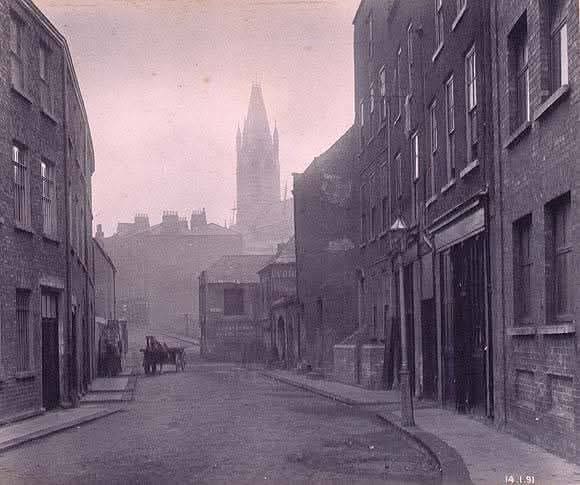
In 1935, the Cornmarket area of Dublin still bore traces of its long history as a commercial heart of the city, originally established as the grain and produce trading hub in the medieval period following the erection of a public water cistern in 1308 that helped formalise the area’s role as a marketplace. By the early 20th century, the district around Cornmarket was known for its mix of older streets and buildings, some dating back centuries. In the 1930s it could be seen as part of a cityscape where remnants of the old city wall stood amid everyday urban life, even as parts of the area were described by contemporary observers as worn and affected by the economic difficulties of the decade. Despite this, Cornmarket’s historic significance as a once-vital trading quarter and its proximity to landmarks such as St Audoen’s Arch and Christ Church continued to define its character in the mid-1930s.
Step back to Augustine Street in The Liberties, Dublin, in 1891, and explore life in Victorian Dubli...