North Frederick Street in Dublin is more than just a city street—it is a living record of the city’s history. By 1912, it was a bustling hub lined with elegant Georgian and Victorian buildings, many of which still stand today, showcasing Dublin’s architectural heritage. The street was home to a mix of shops, taverns, and boarding houses, reflecting the diverse social life of early 20th-century Dubliners. Interestingly, some of the buildings served as meeting places for political activists and cultural societies, quietly shaping the conversations that would influence Ireland’s path to independence. The street also connected key commercial areas, making it a lively passage for merchants, artisans, and students from nearby colleges. Even today, North Frederick Street retains echoes of its past, from the worn cobblestones to the façades that hint at stories of Dublin life over a century ago.
GPO 1916 refers to the General Post Office in Dublin, which played a central role during the 1916 Ea...
Step back to 1975 and witness the iconic Guinness boats docked at Custom House Quay, ready to transp...
Step back in time with this historic 1967 photograph of O’Connell Street, one of Dublin’s most iconi...
Step back in time to Moore Street in the 1930s, one of Dublin’s most iconic markets. This historic s...
Barges on the River Liffey move through the center of Dublin, Ireland’s capital city. The River Liff...
The 1967 image of O’Connell Street captures a lively scene in the heart of Dublin during a time of c...
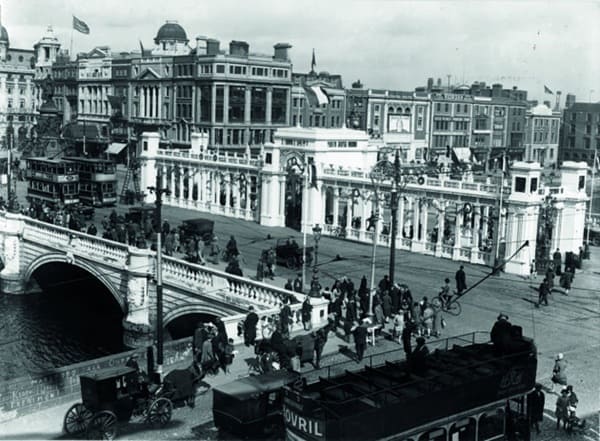
O’Connell Street Bridge, spanning the River Liffey in the heart of Dublin, was completed in 1794 and...
The General Post Office (GPO) on O’Connell Street in Dublin has long been one of the city’s most ico...